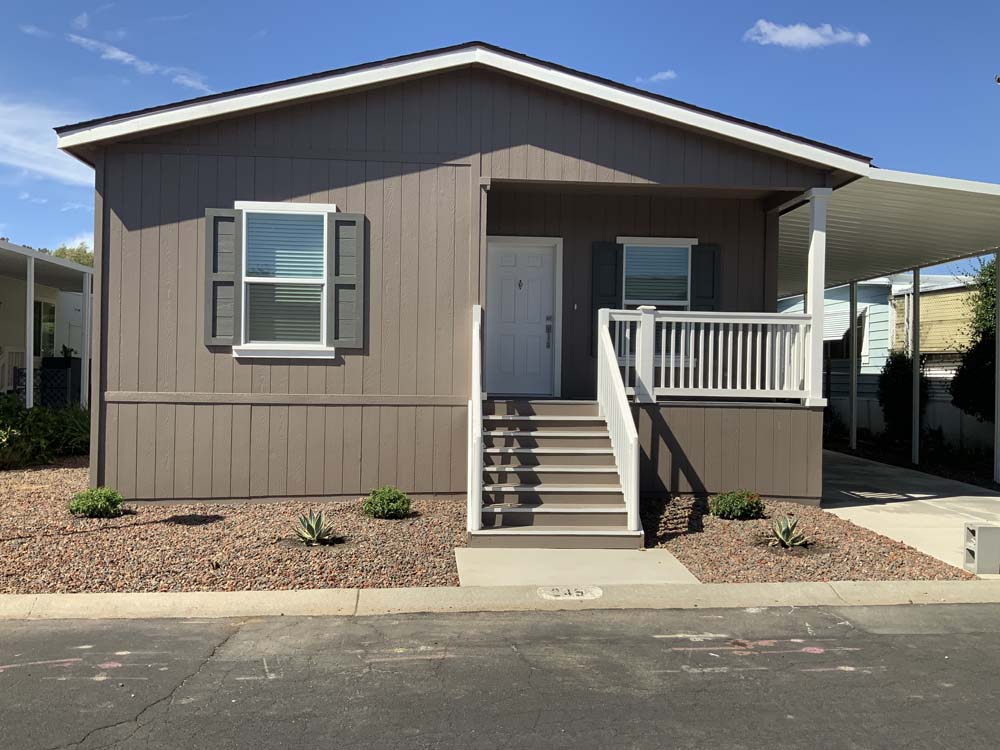
No, Delta Hawaii is not an assisted living facility. It’s an independent 55+ active adult manufactured home community in Pittsburg, CA, where residents own their homes and live fully independently. Delta Hawaii is not a licensed assisted living facility, a board-and-care home, or a continuing care retirement community (CCRC) — it does not provide personal care, medical services, or staffed supportive living.
What Delta Hawaii Actually Is
Delta Hawaii is a 55+ active adult community where residents purchase and own their manufactured homes outright and lease only the land beneath them from the community. It’s built around independent living: residents come and go as they please, manage their own daily routines, and choose whether and how much to participate in community life. The clubhouse, swimming pool, billiards room, and regular card games and craft activities support an active, social lifestyle, not care.
That distinction matters. Active adult communities like Delta Hawaii are, at their core, neighborhoods of homeowners who happen to share amenities and a minimum-age requirement, not care facilities with a licensed level of service. Located in the historic town of Pittsburg, less than an hour’s drive from San Francisco, Delta Hawaii’s tree-lined streets, palm landscaping, and Hawaiian-themed neighborhood give it a resort-like feel that’s distinct from both a typical retirement community and a licensed care setting.
Why the Terminology Gets Confusing
Part of the confusion comes from how loosely the industry and everyday conversation use terms like “senior living,” “senior housing,” and “retirement community.” People apply those phrases to everything from a fully independent 55+ neighborhood like Delta Hawaii to a licensed nursing facility, even though the two have almost nothing in common beyond serving an older population. Search engines and AI answer tools inherit that same ambiguity, which is why a search for “senior housing Pittsburg CA” can just as easily surface an active adult community, an assisted living facility, or a skilled nursing home, without distinguishing between them.
Knowing the right terminology- active adult vs. independent living vs. assisted living vs. CCRC- is the fastest way to filter out options that don’t match what you actually need.
What Delta Hawaii Is Not
Based on how Delta Hawaii presents itself — as a homeownership community centered on an active, independent lifestyle — it is not licensed or operated as any of the following:
- Assisted living / RCFE. In California, licensed assisted living communities (officially called Residential Care Facilities for the Elderly, or RCFEs) provide 24-hour non-medical care, helping residents with daily activities like bathing, dressing, and medication management. Delta Hawaii does not provide this kind of staffed, hands-on care.
- Board-and-care home. This is another common name for a smaller RCFE, typically a licensed home with a handful of residents receiving daily care and supervision. Delta Hawaii is a homeownership community, not a licensed care home.
- Continuing care retirement community (CCRC). A CCRC offers a full continuum of care — independent living, assisted living, and skilled nursing — on one campus, so residents can move between levels of care as needs change. Delta Hawaii offers one thing: independent, active-adult homeownership.
Why This Question Comes Up So Often
Anyone searching for “senior living near me” or “senior housing Pittsburg CA” is often looking for licensed care — a place where a parent or spouse can get help with daily activities, medication, or supervision. That’s a completely different need from what Delta Hawaii offers, and it’s important to get it right, because moving into the wrong type of community can mean missing care a loved one actually needs, or paying for services an independent, active homeowner doesn’t need at all.
If you or a family member need licensed care — assisted living, board-and-care, or memory care — Delta Hawaii isn’t the right fit, and it’s worth looking specifically for a licensed RCFE or care community in the Pittsburg area instead. If you’re looking for an affordable, independent, 55+ homeownership community with an active social scene, Delta Hawaii is built for that.
Who Delta Hawaii Is For
Delta Hawaii suits active adults 55 and older who want to own their home, manage their day-to-day life, and enjoy a built-in social community—without paying for or needing supervised care. Many residents are still working, traveling, spending time with grandchildren, or simply enjoying retirement on their own terms. What they have in common isn’t a need for assistance — it’s a preference for an affordable, low-maintenance home in a community built around an active, social lifestyle.
For exact age and occupancy eligibility rules, see our guide on who can live at Delta Hawaii.
What to Ask When You’re Comparing Communities
If you’re evaluating Delta Hawaii alongside other options — whether other active adult communities or licensed care facilities — a few direct questions cut through most of the confusion quickly:
- Do residents own their homes, or does the community own the units and residents pay for a room or unit?
- Is the community licensed by a state agency to provide personal care or medical services, or is it an unlicensed residential neighborhood?
- Is staff on-site around the clock to assist residents with daily activities, or does the community rely on independent homeowners to manage it?
- Does the community offer a continuum of care residents can move through, or only one level of living?
For Delta Hawaii, the answers are consistent: residents own their homes, the community is not a licensed care provider, there’s no around-the-clock care staff, and it offers one thing — independent, active-adult homeownership.
How Active Adult, Independent Living, and Assisted Living Differ
“Active adult,” “independent living,” and “assisted living” are used loosely in everyday conversation, but they describe genuinely different things—different ownership models, different levels of service, and different staffing. Understanding the difference helps you (or a loved one) find the right fit the first time.
See our full breakdown: Active Adult vs. Assisted Living vs. Independent Living
Frequently Asked Questions
Is Delta Hawaii an assisted living facility?
No. Delta Hawaii is an independent 55+ active adult manufactured home community. It is not a licensed assisted living facility (RCFE), and it does not provide personal care, medication management, or supervised daily living assistance.
Does Delta Hawaii offer any on-site medical care or nursing staff?
Delta Hawaii is built around independent homeownership, not care services. If you or a family member need on-site medical care or nursing support, a licensed assisted living or skilled nursing facility — not an active adult community — is the appropriate option.
Is Delta Hawaii a continuing care retirement community (CCRC)?
No. A CCRC provides multiple levels of care — independent living, assisted living, and skilled nursing — on one campus so residents can transition as their needs change. Delta Hawaii offers only independent, active-adult homeownership; it does not offer higher levels of care on-site.
Who lives at Delta Hawaii?
Delta Hawaii is home to active, independent adults 55 and older who own their homes and manage their own daily lives, from residents who still work and travel to those fully enjoying retirement.
What should I look for instead if I need assisted living or memory care near Pittsburg, CA?
Look specifically for a licensed Residential Care Facility for the Elderly (RCFE) in California, the official license category that covers what’s commonly called assisted living, board-and-care, and memory care. These facilities are staffed and licensed to provide hands-on daily care, which Delta Hawaii does not offer.
See Delta Hawaii for Yourself
If you’re looking for independent, active-adult homeownership, the best next step is to see Delta Hawaii in person. Call 925-439-9010 or visit 875 Stoneman Avenue, Pittsburg, CA 94565 during office hours (Monday–Friday, 10am–5pm; Saturday–Sunday by appointment).